16 Conferences · 2008 – Present
Seventeen years of evidence-based climate debate, bringing together scientists, economists, and policy experts from around the world.
Most recent · 2021 – Present
Science, law, and a new policy moment
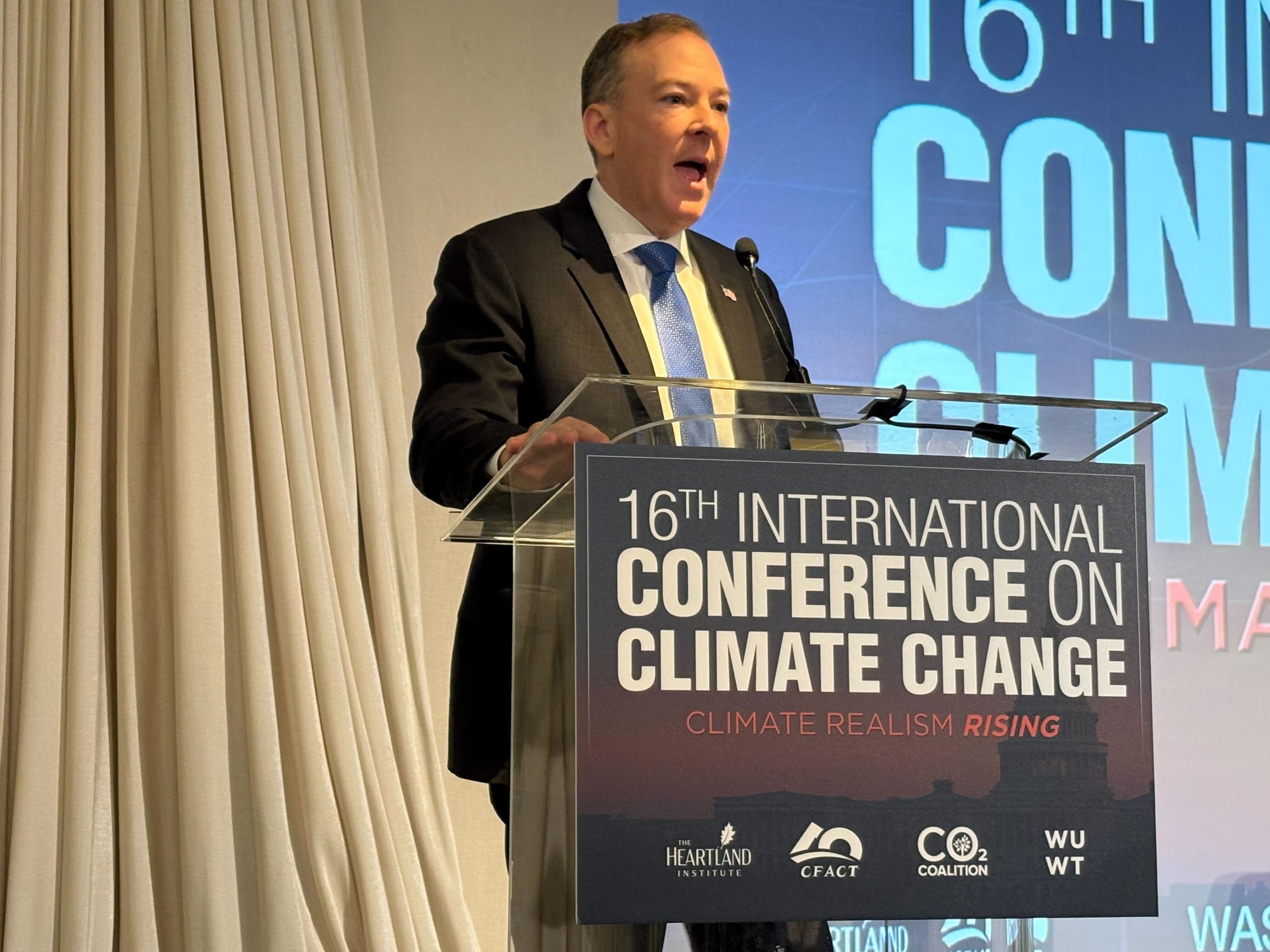
The 16th conference convened at a pivotal moment in U.S. climate and energy policy. EPA Administrator Lee Zeldin delivered the opening keynote just days after the repeal of the Obama-era CO₂ Endangerment Finding, a landmark rollback that reshaped the legal basis for federal emissions regulation. Nobel laureate John Clauser, Princeton professor emeritus William Happer, and West Virginia Governor Patrick Morrisey joined over 30 speakers across two days of plenary sessions and concurrent panels covering the DOE Climate Report, the record of failed climate predictions, natural climate drivers, and the emerging legal and political battles over U.S. energy policy.
The True Crisis: Climate Change or Climate Policy?
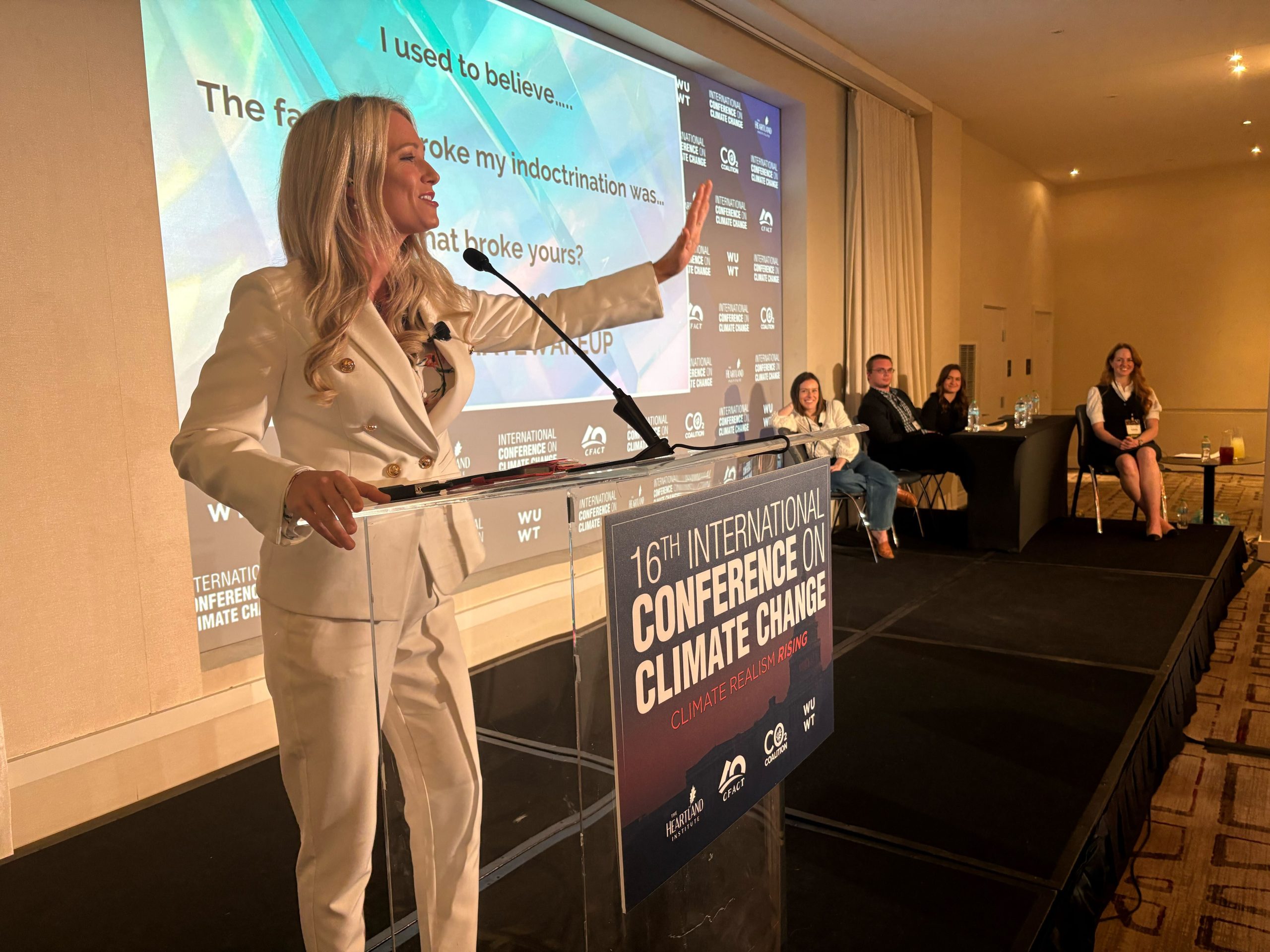
Held in Orlando under the theme "The True Crisis," ICCC15 brought together Nobel laureates, former government officials, and leading climate scientists to document what they described as a widening gap between alarming projections and observed data, and to make the case that aggressive climate policy itself poses the greater threat to human welfare and prosperity. Rep. Lauren Boebert, Dr. William Happer, Dr. Willie Soon, and Dr. Patrick Moore headlined two days of plenary sessions and concurrent tracks covering climate science, energy economics, the ESG movement, and global policy initiatives including the so-called Inflation Reduction Act.
Climate Realism vs. Climate Socialism
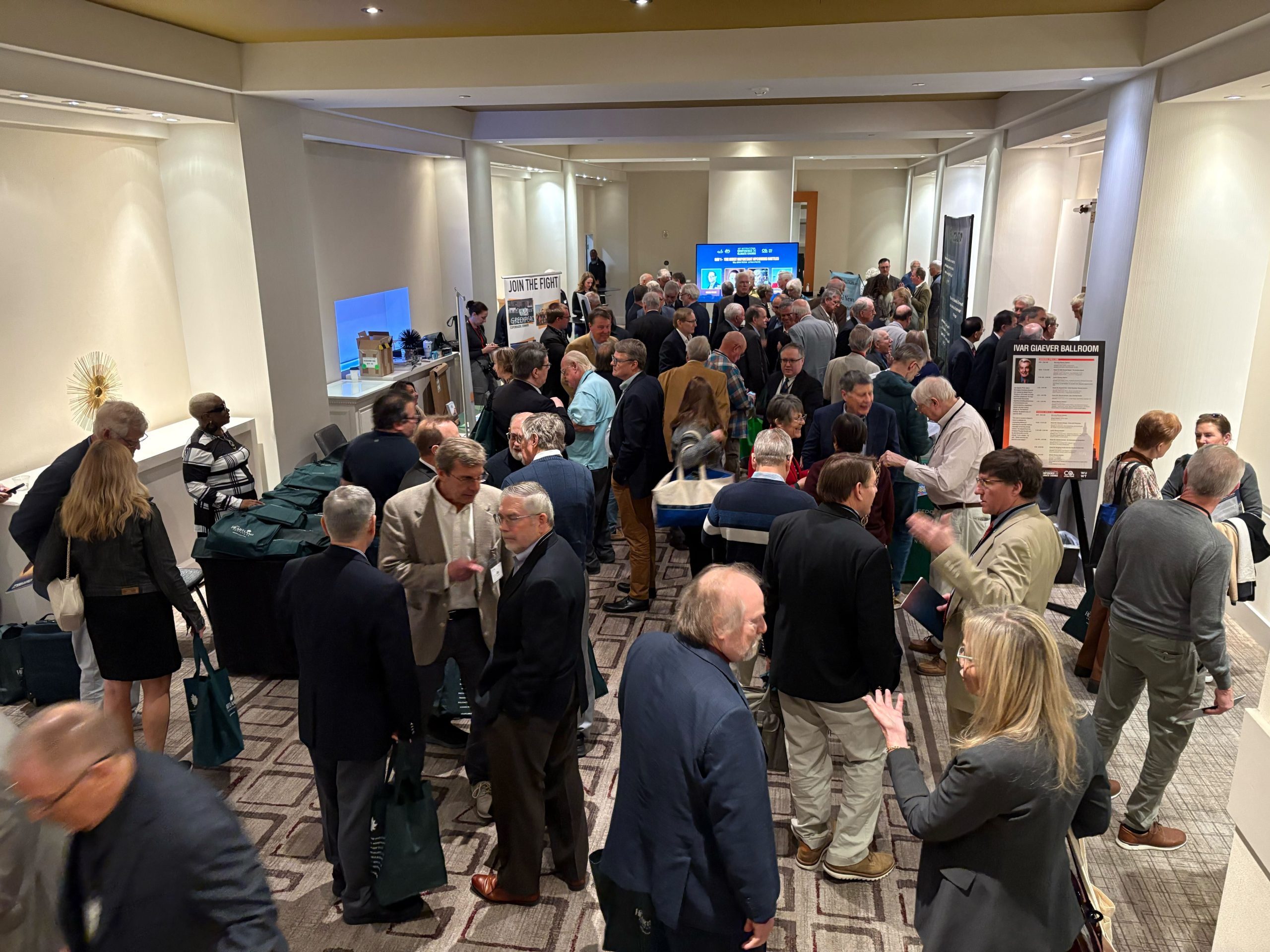
ICCC14 featured more than 40 speakers and an audience of moree than 300, examining the growing ideological dimension of climate policy, with keynotes from Lord Christopher Monckton, James Taylor, and Dr. Patrick Moore. Panels addressed the "Great Reset" narrative and its relationship to climate policy, the rising pressure of ESG investment criteria on energy companies, and the real-world consequences of net-zero targets on energy security and living standards across Europe. The conference made the case that climate realism grounded in data would ultimately prevail over what speakers characterized as climate socialism.
Consolidation · 2015 – 2019
Best science, winning energy policy
ICCC13 convened scientists and policy experts under the banner of "best science." Sessions addressed the reliability of surface temperature records versus satellite data, the dominant role of natural climate variability, and the policy case for reliable and affordable energy. With the Green New Deal gaining political momentum, the conference presented a detailed counter-argument grounded in observational science and economic analysis.
Resetting U.S. climate policy
With the new Trump administration having pledged to withdraw from the Paris Agreement, ICCC12 focused on what a genuine reset of U.S. climate and energy policy could look like. Sessions covered regulatory rollback at the EPA, the restoration of energy independence, scientific accountability within federal agencies, and the economic costs that had accumulated under the previous administration's climate agenda.
Post-Paris policy analysis
The Heartland Institute partnered with the Germany-based European Institute for Climate and Energy (EIKE) to host the Eleventh International Conference on Climate Change at the Haus der Technik in Essen, Germany, timed to coincide with COP21 in Paris. It offered an independent scientific and economic perspective as world governments assembled to negotiate what would become the Paris Agreement. Speakers challenged both the scientific consensus claimed by negotiators and the economic projections used to justify sweeping new emissions commitments.
Science and economics before Paris
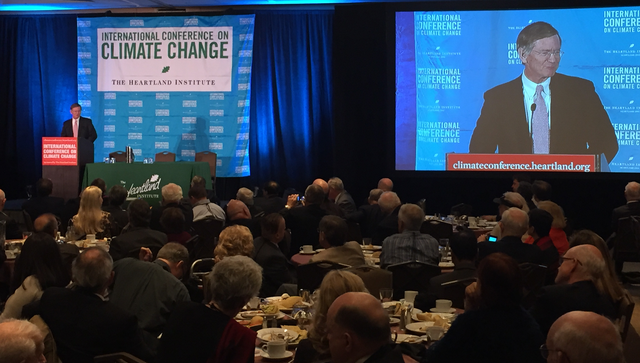
Held ahead of the Paris Agreement negotiations, ICCC10 presented data-driven assessments of climate sensitivity, the economics of proposed emissions reductions, and the likely real-world impact of international climate targets. Sessions highlighted the divergence between model-based projections and 15 years of observational temperature data since the IPCC's Third Assessment Report. The theme of the conference was “Fresh Start! The New Science and Economics of Climate Change.” Speaker after speaker confirmed that scientists increasingly question whether climate change is a serious problem and economists find the cost of reducing carbon dioxide emissions vastly exceeds any possible benefits, even assuming the alarmists’ science is accurate.
Going global · 2011 – 2014
Record attendance and broadened scope
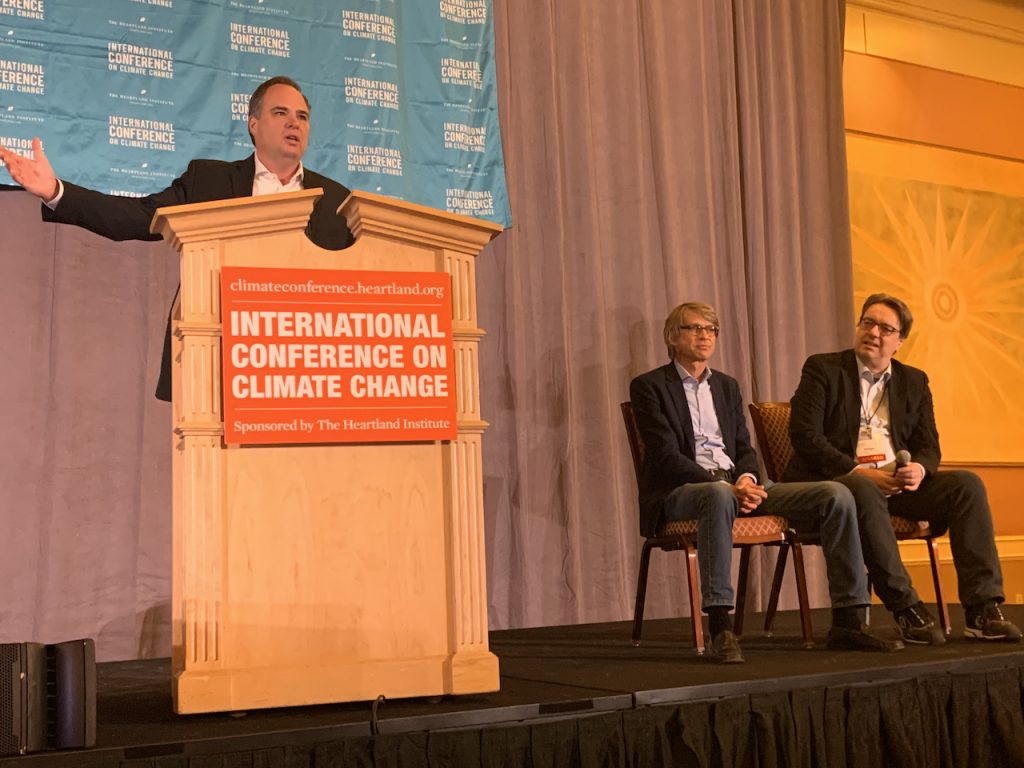
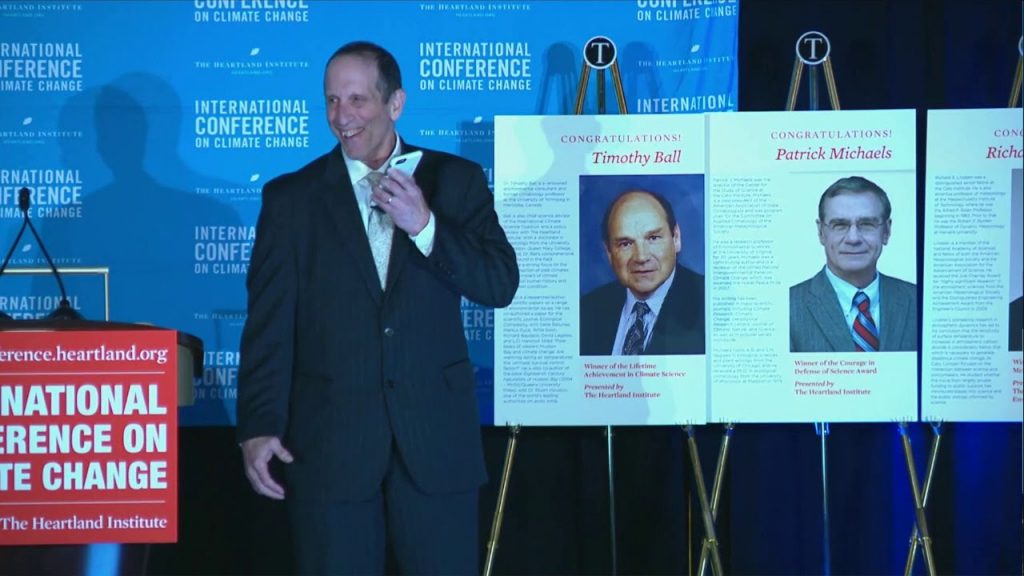
The ninth conference set an attendance record and significantly broadened its programmatic scope, with dedicated sessions on satellite temperature data, tide gauge sea level records versus satellite altimetry, and the growing economic costs of renewable energy mandates. The conference also examined the "pause" in surface temperature warming that had persisted for over a decade. Ten awards were given for life-time achievement, courage in defending climate science, effective communication, and more during five plenary sessions. While environmental activists and some politicians claim “the debate is over” and call for immediate action to reduce man-made greenhouse gas emissions, others say the science points to only a very small human impact, and the costs of trying to prevent global warming far exceed the benefits.
First European conference — international perspectives
ICCC8 marked the series' European debut, co-organized with German think tank EIKE to convene scientists from across the continent. Sessions addressed EU climate and energy policy, the rapidly rising costs of Germany's Energiewende, and the growing divergence between IPCC model projections and observational data from European and global temperature records. Dr. S. Fred Singer, Heartland senior fellow and director of the Science and Environmental Policy Project, and Heartland Senior Fellow James M. Taylor joined many internationally renowned scientists for the first two-day ICCC-sponsored event in Europe.
Heartland's hometown, a defining moment
The seventh conference returned to Chicago amid heightened public and media attention, drawing hundreds of attendees for sessions on solar variability and its relationship to the climate record, ocean cycles as climate drivers, and a detailed scorecard of IPCC temperature predictions against two decades of observed data. The conference also addressed attempts to suppress and discredit independent climate research. Major developments on the science front since the previous ICCC took place including publication of a new report by the Nongovernmental International Panel on Climate Change (NIPCC) updating its 2009 report, Climate Change Reconsidered, and a new report from the Intergovernmental Panel on Climate Change (IPCC) on climate change and extreme weather events.
Open debate in the Climategate aftermath
Dozens of think tank cosponsors and hundreds of scientists gathered in an effort to “restore the scientific method” to its rightful place in the debate over the causes, consequences, and policy implications of climate change. The theme of the conference, “Restoring the Scientific Method,” acknowledged the fact that claims of scientific certainty and predictions of climate catastrophes are based on “post-normal science,” which substitutes claims of consensus for the scientific method. This choice has had terrible consequences for science and society.
The founding years · 2008 – 2010
Southern hemisphere debut
The ICCC series made its first appearance in the southern hemisphere, convening scientists and policy experts in Sydney to address climate policy proposals gaining political momentum in Australia. Sessions covered the proposed Australian emissions trading scheme, southern hemisphere temperature records, and the perspectives of Pacific-region scientists on sea level and coral reef research.
After Copenhagen — a moment of scrutiny
Held in the aftermath of both the failed Copenhagen climate summit and the Climategate revelations, ICCC4 focused sharply on the credibility of the IPCC and the independence of temperature records. The speakers and audience considered how new scientific discoveries have cast doubt on how much of the warming of the twentieth century was natural and how much was man-made, and governments around the world are beginning to confront the astronomical cost of reducing emissions. Geologist, astronaut, and former U.S. Senator Harrison Schmitt kicked off the event with an opening keynote presentation on constitutional law as it relates to climate change issues. Climate Audit author Steve McIntrye followed with a chronology of "hide the decline" and other Climategate-related issues.
Cap-and-trade and the policy battle
Held as the U.S. Congress debated the Waxman-Markey cap-and-trade bill, at the time the most sweeping climate legislation ever introduced in America. ICCC3 brought the scientific and economic debate directly to Washington. While the scientists reported on a vast array of peer-reviewed literature that cast doubt on the causes and severity of global warming, the economists produced data that showed the cap-and-trade scheme not only wouldn’t halt the release of greenhouse gases, but would add huge costs to business activity that inevitably would be passed along to consumers in the form of higher prices.
Building the international network
The second conference drew a significantly larger and more international audience than the first, with speakers and attendees from Europe, Australasia, and across North America presenting new findings on climate sensitivity, the reliability of surface temperature records, and the economic implications of proposed cap-and-trade and carbon tax policies then advancing in multiple countries simultaneously. The conference demonstrated that the number of global warming “realists” is growing rapidly, and the scientific community is turning against alarmism.
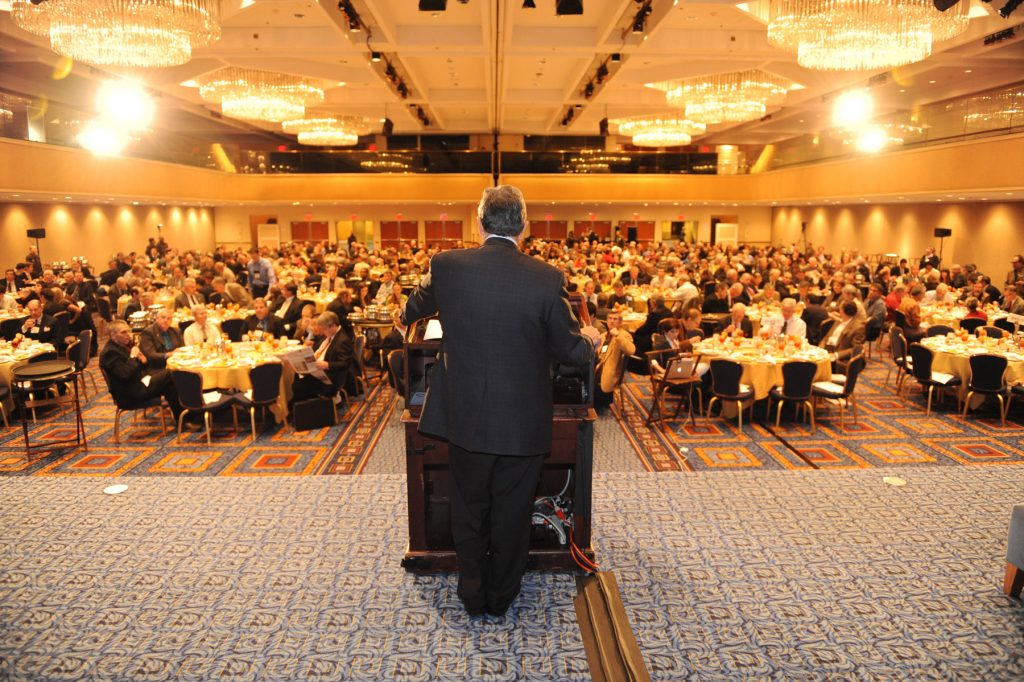
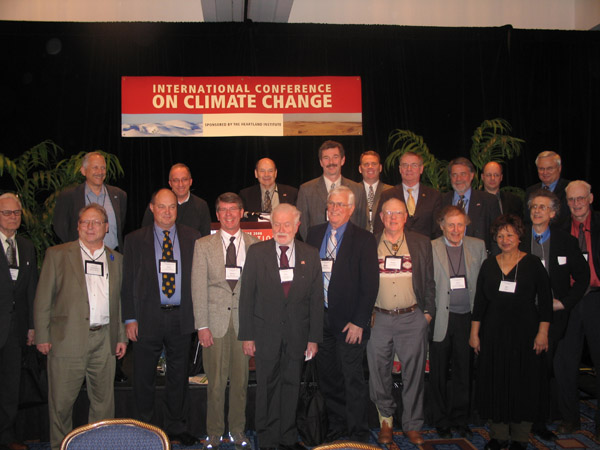
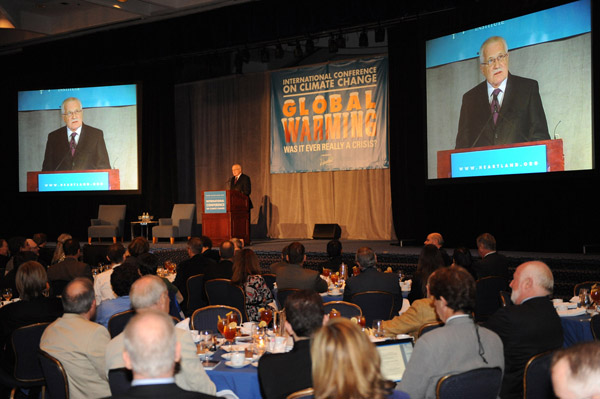
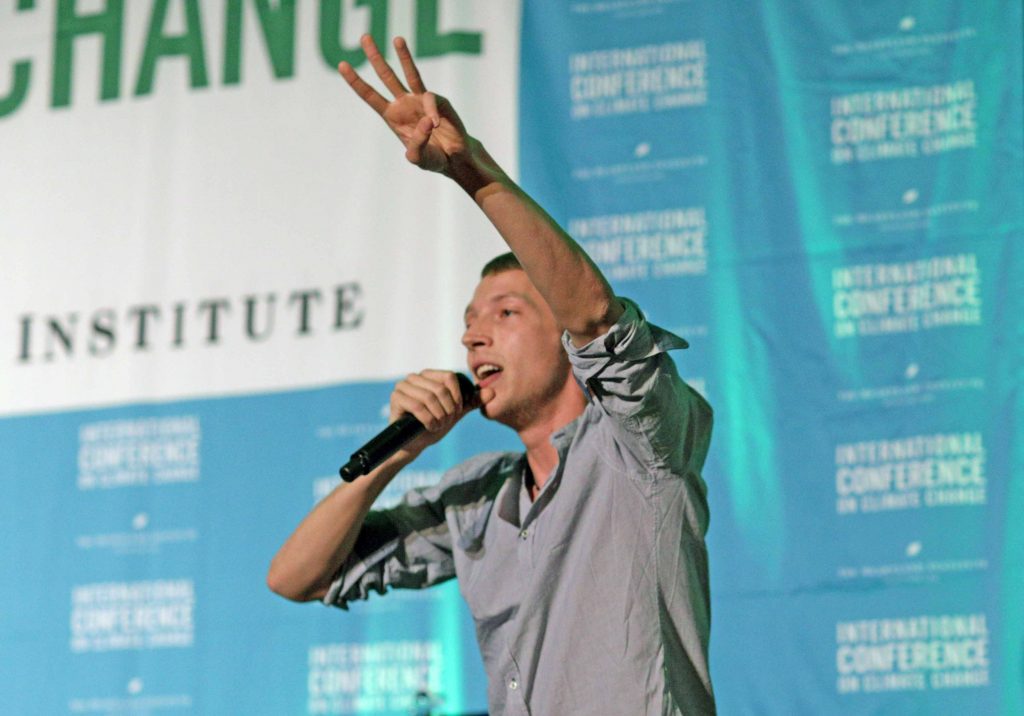
The conference that started it all
The inaugural ICCC convened over 100 scientists, economists, and policy experts in New York. 73 speakers from 23 countries presented a rigorous, data-driven counter-narrative to the emerging political consensus on climate change. Attendees signed the Manhattan Declaration on Climate Change, calling for open scientific debate and opposing taxes and regulations on CO₂ emissions. It was the first major international gathering of its kind, and it launched a series that would run for nearly two decades.